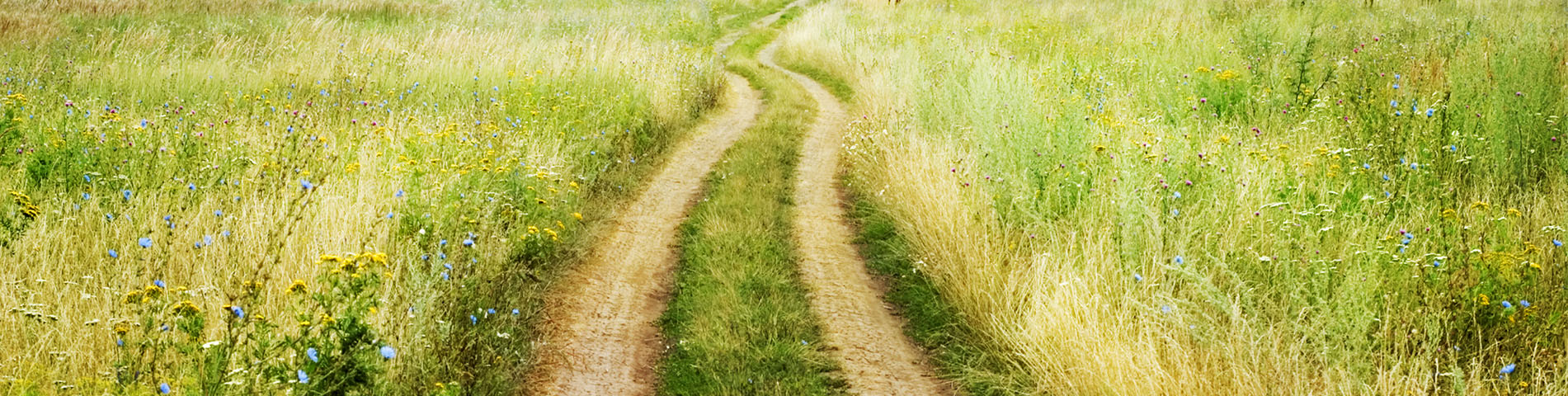
The Camino Portugués, or Via Lusitana, is one of the most popular pilgrimage routes to Santiago de Compostela. Starting from Porto in Portugal, walkers can choose between two distinctive routes: the coastal route, which follows the Atlantic shoreline through wild beaches and fishing villages, and the central route, which crosses the interior through historic towns and vineyard-covered hills. Both routes converge in Galicia and lead to the cathedral of Santiago de Compostela. The Portuguese Camino attracts walkers with its diverse landscapes, rich cultural heritage, warm hospitality and outstanding Portuguese gastronomy.
Key features of the Camino Portugués
- Official name: Via Lusitana (Camino Portugués)
- Total distance: approximately 250 km (from Porto)
- Number of stages: coastal route (12 stages) or central route (7 stages from Ponte de Lima)
- Number of sections: 2 (coastal and central)
- Recommended season: spring, summer and autumn (April to October)
- Difficulty: Level 2 to 3, depending on the route (on average 5 to 6 hours of walking per day, with some stages exceeding 25 km)
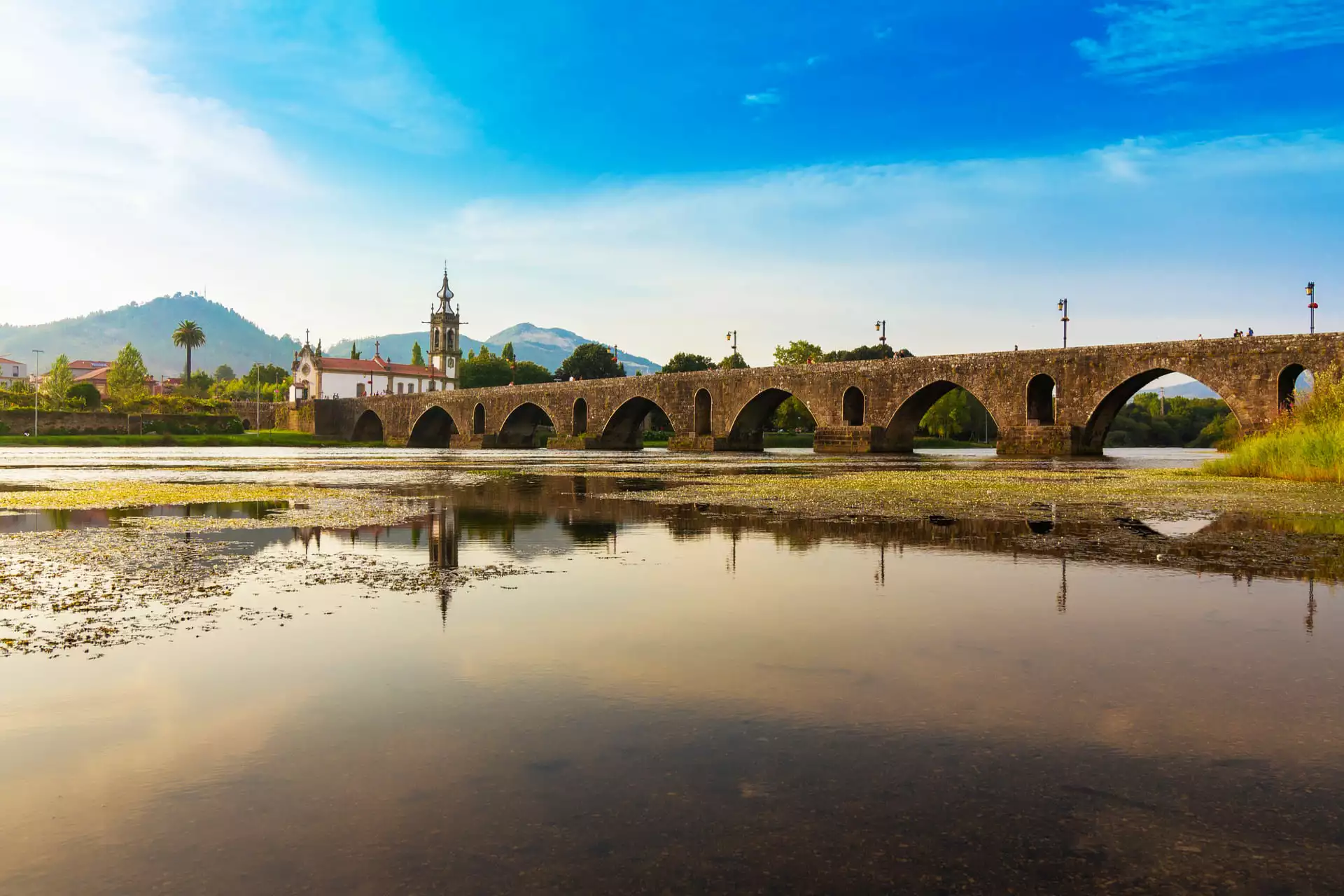
- Key points of interest: Porto (Sé Cathedral, Dom Luís I Bridge, the Douro riverfront), Vila do Conde (Santa Clara Monastery), Ponte de Lima (medieval bridge and picturesque village), Viana do Castelo (Santa Luzia Basilica), Pontevedra (Peregrina Sanctuary), and Santiago de Compostela (the cathedral, the pilgrims' mass and the Botafumeiro)
- Regions crossed: Área Metropolitana do Porto, Cávado, Alto Minho, Galicia
- Extension: Santiago de Compostela to Fisterra (6 days) or Muxía (an additional 1 to 2 days)
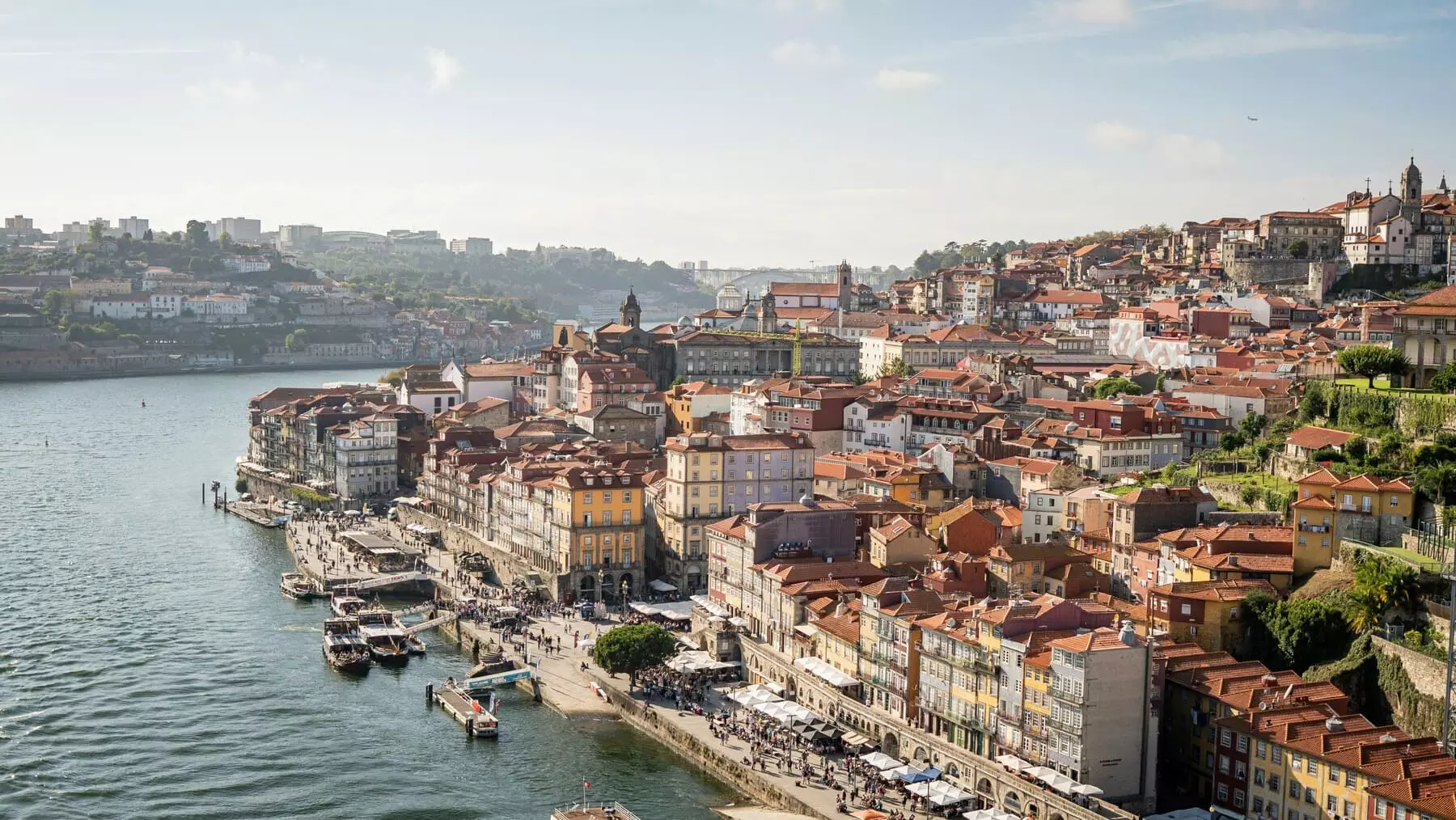
Overview of the Portuguese Camino routes
The Portuguese Camino from Porto to Santiago de Compostela is one of the most popular alternatives to the Camino Francés. From Porto, a UNESCO World Heritage city, walkers choose between two celebrated routes.
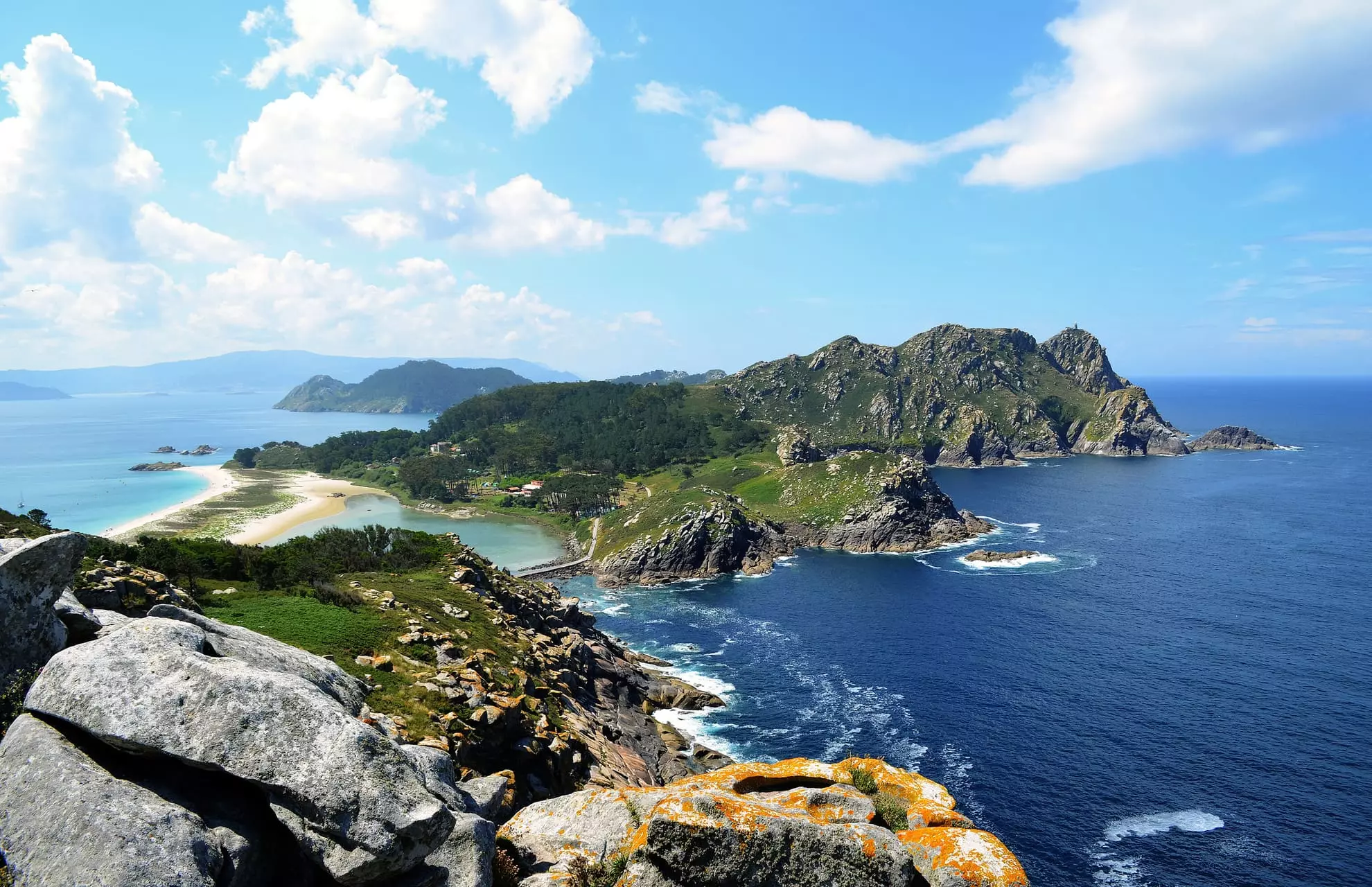
The Portuguese Coastal Camino follows the Atlantic Ocean, offering stunning seascapes, wild beaches and authentic fishing villages. The salt air and ocean breeze make this a refreshing walk, even in summer.
The central route is more traditional, crossing the Portuguese hinterland through green hills, vineyards and historic towns. The terrain is more undulating, with some demanding climbs, but the cultural immersion is deeper.
Both routes merge in northern Galicia and share the final stages into Santiago de Compostela. Whether you seek the Atlantic air or the cultural richness of the interior, the Camino Portugués from Porto is a unique experience combining nature, heritage and gastronomy.
Camino Portugués stages
Coastal route: Porto to Santiago de Compostela
The Portuguese Coastal Camino follows the Atlantic shoreline from Porto northwards through Portugal and into Galicia. You walk past sandy beaches, cliff-top paths and lively fishing ports, with the ocean as your constant companion. After crossing into Spain at the Minho river estuary, the trail passes through Baiona and Vigo before joining the central route at Redondela for the final stages to Santiago.
| From | To | Distance |
|---|---|---|
| (Porto) Matosinhos | Vila do Conde | 24 km |
| Vila do Conde | Esposende | 25 km |
| Esposende | Viana do Castelo | 23 km |
| Viana do Castelo | Caminha | 28 km |
| Caminha | Oia | 19 km |
| Oia | Baiona | 18 km |
| Baiona | Vigo | 28.5 km |
| Vigo | Redondela | 14 km |
| Redondela | Pontevedra | 21 km |
| Pontevedra | Caldas de Reis | 23 km |
| Caldas de Reis | Padrón | 20 km |
| Padrón | Santiago de Compostela | 23 km |
Total Distance : 266,5 km
For tailor-made stages: Vila Praia de Âncora.
Central route: Ponte de Lima to Santiago de Compostela
The central route of the Camino Portugués crosses the Portuguese hinterland through a landscape of green hills, eucalyptus forests and vine-covered terraces. From Ponte de Lima, one of the oldest towns in Portugal and famous for its medieval bridge, the trail heads north through Valença and crosses the Minho into Spain at Tui. From Redondela, the central and coastal routes share the same path to Santiago.
| From | To | Distance |
|---|---|---|
| Ponte de Lima | São Roque | 17.5 km |
| São Roque | Valença | 18 km |
| Valença | Redondela | 34.5 km |
| Redondela | Pontevedra | 20 km |
| Pontevedra | Caldas de Reis | 21 km |
| Caldas de Reis | Padrón | 20 km |
| Padrón | Santiago de Compostela | 25 km |
Total Distance : 156 km
For tailor-made stages: O Porriño, Teo.
Tips for planning your walk on the Camino Portugués
Best time to go
You can walk the Portuguese Camino on any date you choose between April and October. Here are a few seasonal tips:
- In spring (April and May), nature comes alive: green fields, flowering vines and mild temperatures create ideal conditions for walking without too much heat.
- In early summer (June), the long days and beautiful light enhance both the coastal and central routes. The weather is pleasant and perfect for longer stages. In July and August, the trail is busier and temperatures are higher, but the proximity of the ocean on the coastal route brings a refreshing breeze. If you choose the central route in midsummer, setting off early in the morning is advisable.
- In autumn (September and October), the trails grow quiet again. The vineyards turn golden, the weather remains fair and the atmosphere is more peaceful.
Comparing the two routes
The central route is the historic and more traditional itinerary. It crosses the interior, passing through traditional villages, forests and valleys. The terrain is more undulating, particularly with the famous climb over the Serra da Labruja between Ponte de Lima and Rubiães, widely considered the most demanding section of the Portuguese Camino. The stages can be long, but they offer a deeper cultural and spiritual immersion, with stops in emblematic towns such as Barcelos, Ponte de Lima and Tui.
The coastal route is more recent and less demanding in terms of elevation. It appeals to walkers with its seascapes, Atlantic beaches, fishing villages and lively ports. Although the terrain is gentler, some stages are long and you may be exposed to wind or sun. It is an excellent choice for walkers seeking tranquillity and ocean panoramas.
In general terms, the central route is more challenging and steeped in tradition, while the coastal route is gentler and more contemplative. Both converge in Galicia for the final stages to Santiago de Compostela.
Our favourite stages
- The central route: an authentic journey through wine-producing valleys, traditional villages and eucalyptus forests. The highlight is the climb over the Serra da Labruja, demanding but rewarding with spectacular panoramas, before reaching the green hills of Galicia.
- The coastal route: a walk set to the rhythm of the Atlantic, past endless beaches, wild cliffs and picturesque fishing ports. The Minho river estuary and the coastal panoramas of Galicia are among its finest moments.
With Walks in France, your accommodation is booked in advance, your luggage is transferred between each stage, and you receive a detailed route book with maps and directions. We organise self-guided walking holidays on both the coastal and central routes of the Camino Portugués, and we can create a tailor-made itinerary adapted to your pace and schedule.
You can also explore our other Camino de Santiago routes, including the Camino Francés, the Camino del Norte, and the Way of St James in France.
Why choose Walks in France ?
Specialist in compostela stays
35 years of experience
An human-scale agency
No baggage to wear
Quality accomodation
Taylor-made stays