The Camino de Santiago

The story behind the Camino de Santiago.

Every year, thousands of walkers set out on the Camino de Santiago. Whether as a spiritual journey, a personal challenge, or a religious pilgrimage, the goal is the same: to reach the Cathedral of Santiago de Compostela in Galicia, north-west Spain. In this guide, we cover the history of the city, built on the site where the tomb of St James is said to have been found, the main routes that lead there, and the key places you will pass along the way.

The history of Santiago de Compostela

The story of the Camino de Santiago, step by step

Who was St James? Why has the pilgrimage to the Cathedral of Santiago de Compostela drawn so many people for so long? Here is the story behind one of the world's best-known long-distance walks.

Who was St James?

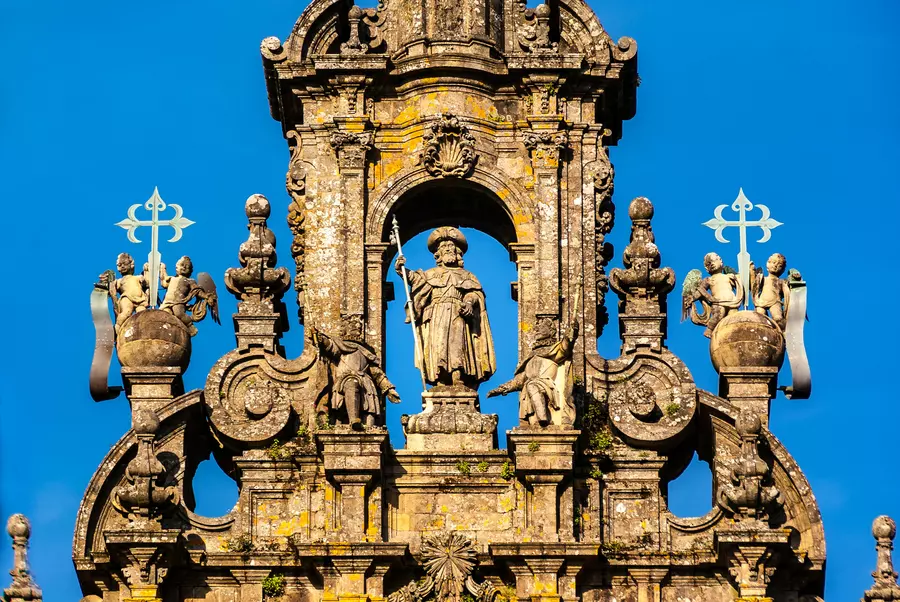
St James is also known as James, son of Zebedee, James the Great, and Santiago in Spanish. In Christian tradition, he was one of the twelve apostles and one of the closest disciples of Jesus. He is said to have been among the few witnesses of the Transfiguration.

A powerful legend grew up around him. According to tradition, he was sent to the west, including Spain, to spread the Christian faith.

How did the pilgrimage begin?

According to tradition, after Pentecost, St James travelled to Spain to preach. He landed on the Mediterranean coast of Andalusia and made his way to Galicia, in the far north-west of the Iberian Peninsula. After several years, he returned to Jerusalem, where he was beheaded, becoming one of the first Christian martyrs.

Two of his disciples placed his body in a boat and set sail. The boat drifted to the coast of Galicia, running aground in an estuary near the town that would later become Padrón (the second-to-last stage on the Camino Portugués before Santiago). His disciples buried the apostle's body inland, on the site where the city of Santiago de Compostela would be built.
Why is Santiago de Compostela important for Christians?

The Camino de Santiago is the third most important Christian pilgrimage site, after Jerusalem and Rome. Beneath the foundations of Santiago de Compostela lie what are believed to be the remains of James the Great. As one of the twelve apostles and the first to be martyred, his tomb has drawn pilgrims seeking reflection, forgiveness and spiritual renewal for over a thousand years.

The historian Denise Péricard-Méa has written widely about the meaning of Santiago de Compostela and the devotion to St James since the late Middle Ages, in works such as Compostelle 813-2013 and Les routes de Compostelle.

St James has also become a point of connection between walkers. Associations such as the Confraternity of Saint James in the UK and similar organisations across Europe bring together people from all walks of life to share advice, walk together and support those setting out on the trail for the first time.

The main Camino de Santiago routes

Thinking of walking to Santiago de Compostela? Here is what you need to know before you set off.

Where does the Camino start and finish?

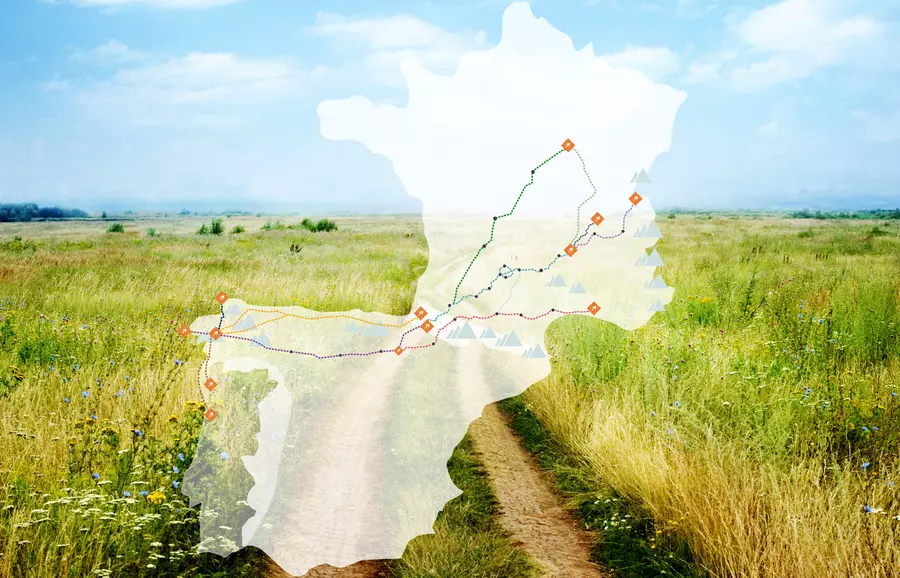
There are several routes across France that lead to Spain and on to Santiago de Compostela. The most common starting points in France are Le Puy-en-Velay, Arles, Vézelay, Paris and Cluny.

The main routes to Santiago de Compostela

For centuries, the Camino de Santiago has drawn walkers who choose to follow in the footsteps of generations of pilgrims. Whether you see it as a pilgrimage, a spiritual journey or simply a long walk to clear your head, the Camino offers, across its different routes, a mix of landscapes and encounters that stays with you long after the walk is over.

Walks in France organises walking holidays on the Camino de Santiago across France, Spain and Portugal. Setting out from Le Puy-en-Velay, Saint-Jean-Pied-de-Port, Geneva, Vézelay, Cluny, Arles, Toulouse or Hendaye means gradually settling into the rhythm of the trail.

The Camino de Santiago routes

Find out more: The main routes to Santiago de Compostela

How long does the Camino take?

The time needed to complete the Camino de Santiago depends on the route you choose, your walking pace and your fitness. You do not have to walk it all at once. Walking from Le Puy-en-Velay or Arles to Santiago de Compostela takes around 75 days in total, but most people walk one section at a time.

Whether you walk for five days, a week, a fortnight or longer, Walks in France can organise your trip.

Preparing for the Camino de Santiago

The Camino de Santiago is known the world over. Every year, thousands of walkers pack their rucksacks and set out across France and Spain on foot, heading for the Cathedral of Santiago de Compostela.

They choose their stages according to the time they have and start from different points along the route. Here you will find advice on routes, kit, training and practical preparation for a successful walk.

Key places along the Camino

Depending on the route you choose, you will pass through some remarkable places. Here are a few highlights.

Le Puy-en-VelayLe Puy-en-Velay

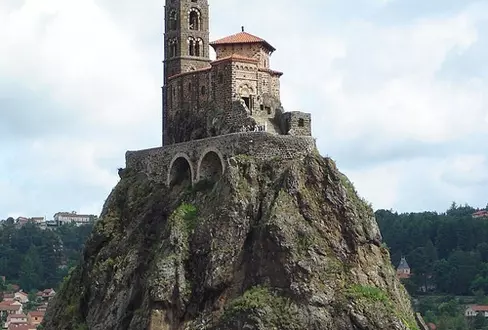
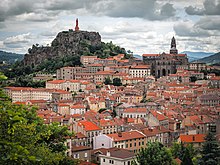
Le Puy-en-Velay is the starting point of the most popular route across France. It is often considered the European capital of the Camino de Santiago, largely because its bishop was the first French pilgrim to walk to Santiago, back in the 10th century. Before you set off, take time to visit the Notre-Dame Cathedral, the statue of Notre-Dame de France, the Chapel of Saint-Michel d'Aiguilhe, the cloister and the Hôtel-Dieu.


ConquesConques

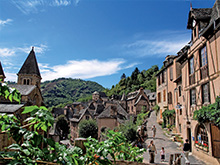
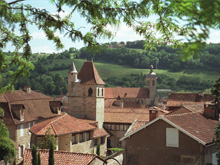
This small village on the Le Puy Way is one of the most beautiful in France. Its cobbled streets and half-timbered houses date from the medieval period. The Abbey Church of Sainte-Foy, a UNESCO World Heritage Site, has a magnificent carved tympanum depicting the Last Judgement, a treasury, and stained-glass windows by Pierre Soulages.


FigeacFigeac

On the Le Puy Way, Figeac is the birthplace of Jean-François Champollion, the man who deciphered Egyptian hieroglyphs. The town has a lively medieval centre, the Champollion Museum of World Writing, the Place des Écritures with its reproduction of the Rosetta Stone, and the Place Carnot, known for its local produce market.


CahorsCahors

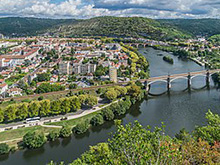
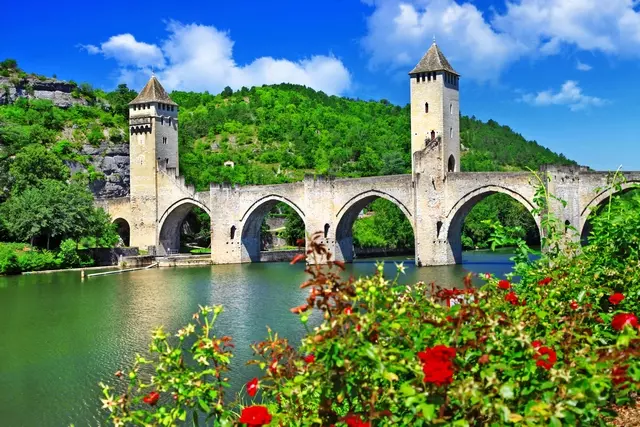
Still on the Le Puy Way, Cahors is known for the Pont Valentré, a 14th-century fortified bridge and UNESCO World Heritage Site. The old town has fine half-timbered houses, a historic market square, and the Romanesque Cathedral of Saint-Étienne with its two great domes and remarkable cloister. The city also has 25 hidden gardens tucked away behind its streets.


ArlesArles

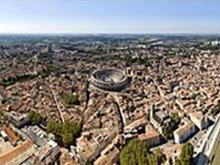
The starting point of the Arles Way, this city in Provence is famous for its Roman amphitheatre, dating from the 1st century AD. The old town has charming streets, the remains of the Roman theatre, the Réattu Museum, the Van Gogh space, and the Abbaye de Montmajour nearby.


ToulouseToulouse

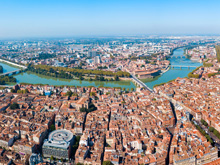
Known as the "Pink City", Toulouse sits on the Arles Way. Its highlights include the Capitole, the Basilica of Saint-Sernin, the Jacobins convent, and the elegant Hôtel d'Assézat in Renaissance style. Walk along the banks of the Garonne for a fine view of the city.


Saint-Jean-Pied-de-PortSaint-Jean-Pied-de-Port

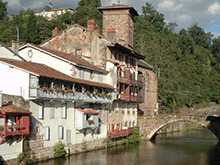
This classic Basque town is one of the essential stops on the Le Puy Way. Its cobbled streets, half-timbered houses and red shutters give it a distinctive character. It is classified among the most beautiful villages in France. Highlights include the citadel, local food shops, and the Porte Saint-Jacques, the symbolic gateway for pilgrims crossing into Spain.


Monte del GozoMonte del Gozo, Spain

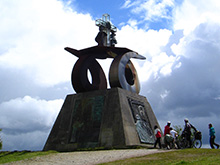
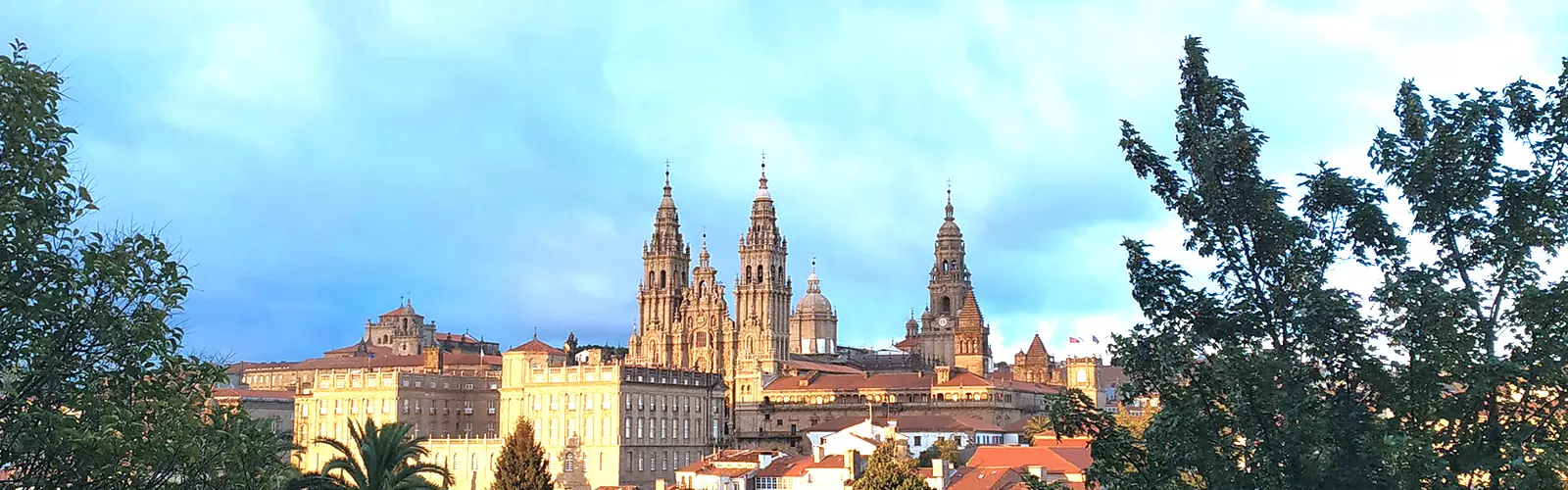
Five kilometres from Santiago de Compostela, on the Camino Francés, Monte del Gozo is the last viewpoint before the city. From here, you can see the spires of the Cathedral of Santiago de Compostela for the first time.


The city of Santiago de Compostela

Santiago de Compostela

Santiago de Compostela is the capital of Galicia and one of the world's great pilgrimage cities. Over three million visitors come every year to explore its streets, where Romanesque, Gothic and Baroque architecture sit side by side.

Built on the tomb of the Apostle St James, the city draws visitors above all for its cathedral, a remarkable monument filled with relics. But Santiago has much more to offer beyond the cathedral.

The Cathedral of Santiago de Compostela

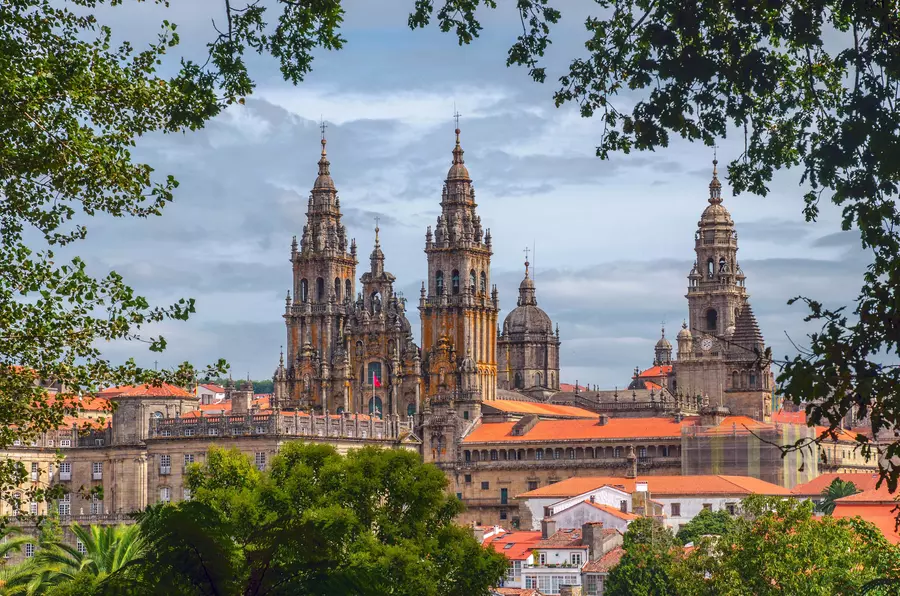
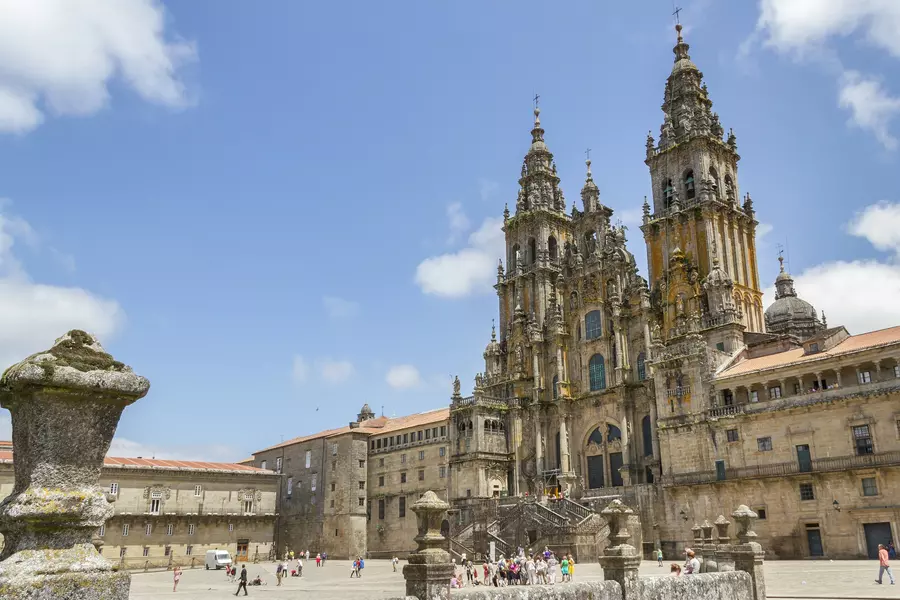
The Cathedral of Santiago de Compostela owes its fame to the apostle St James, one of the closest disciples of Jesus Christ, whose body was buried on the site where the city would later rise.

It was in the 9th century, during the period of Muslim rule in Spain, that the tomb was rediscovered. King Alfonso II of Asturias, quickly informed, travelled to the site. He would become the very first pilgrim to Santiago de Compostela, the first of many pilgrims.

The Church of Santa María del Sar

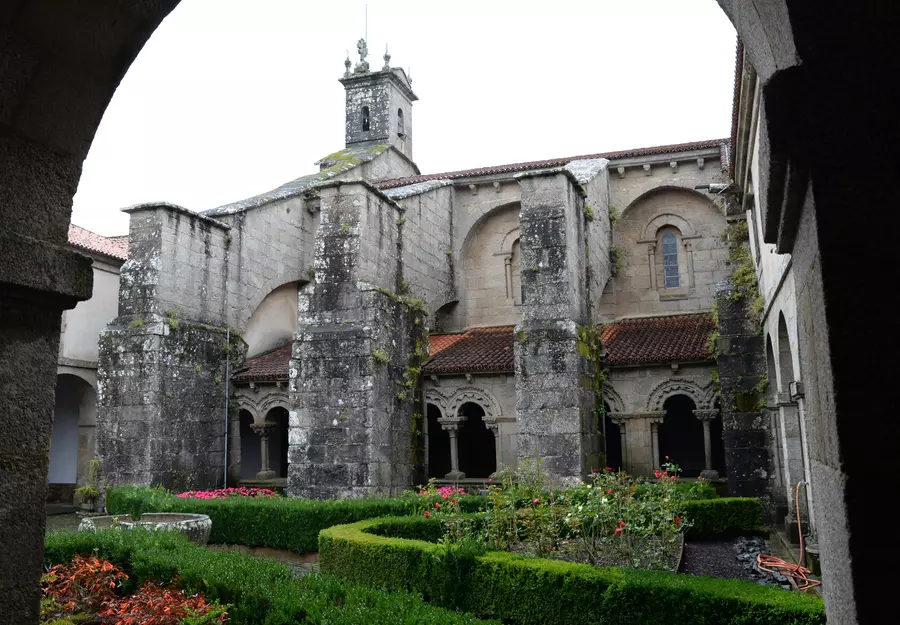
Outside the historic centre of Santiago de Compostela, the Romanesque Church of Santa María del Sar was built on the banks of the River Sar in the 12th century. Its simple beauty and balanced proportions, with polygonal apse windows, columns and carved detail, make it well worth the short walk. From outside, you can see the large flying buttresses, added to protect the building from earthquakes.

The former priory also includes an unusual chapter house, a beautiful Romanesque cloister, and remarkable sculptures by Master Mateo. The Romanesque Church of Santa María del Sar is built as a three-aisled basilica. Behind the church, the Museum of Sacred Art can also be visited, displaying a collection of liturgical and religious objects.

Arriving in Santiago de Compostela

The Botafumeiro

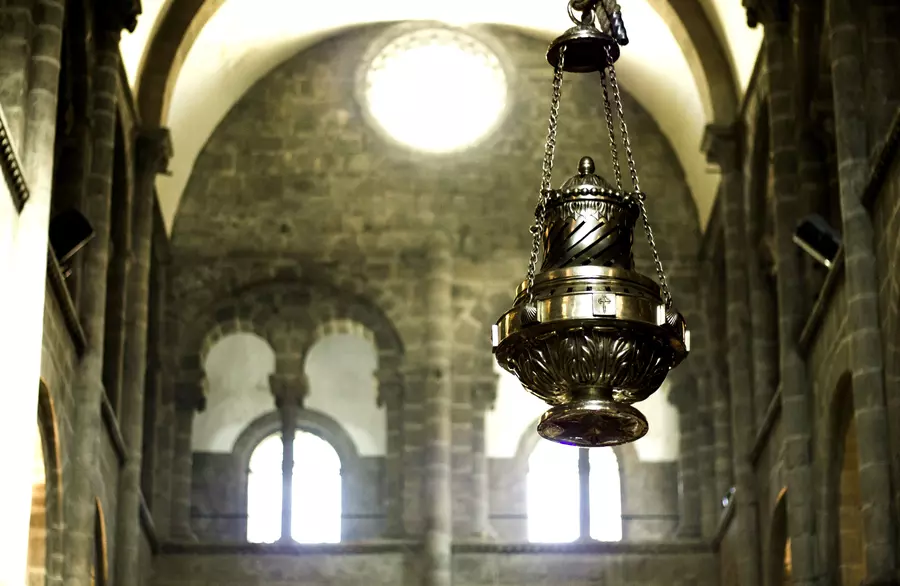
The Botafumeiro is one of the most famous sights in Santiago de Compostela. This silver-plated brass censer stands 1.60 metres tall and weighs 54 kilograms. It was made by the silversmith Losada in 1851 and was originally used to perfume the cathedral. It hangs from a cable beneath the transept.

During special liturgical celebrations and Holy Years, and at the daily pilgrim mass at midday, eight men (tiraboleiros) swing the Botafumeiro like a giant pendulum, pulling the rope at its lowest point and releasing it at its highest. It reaches a height of over 20 metres and swings across the full length of the transept, passing close to the ground at nearly 70 kilometres per hour, leaving a trail of smoke behind it.

Symbols of the Camino de Santiago

The pilgrim credential, the scallop shell, the pilgrim staff: here is what these symbols of the Camino de Santiago mean and where they come from.

The Credential

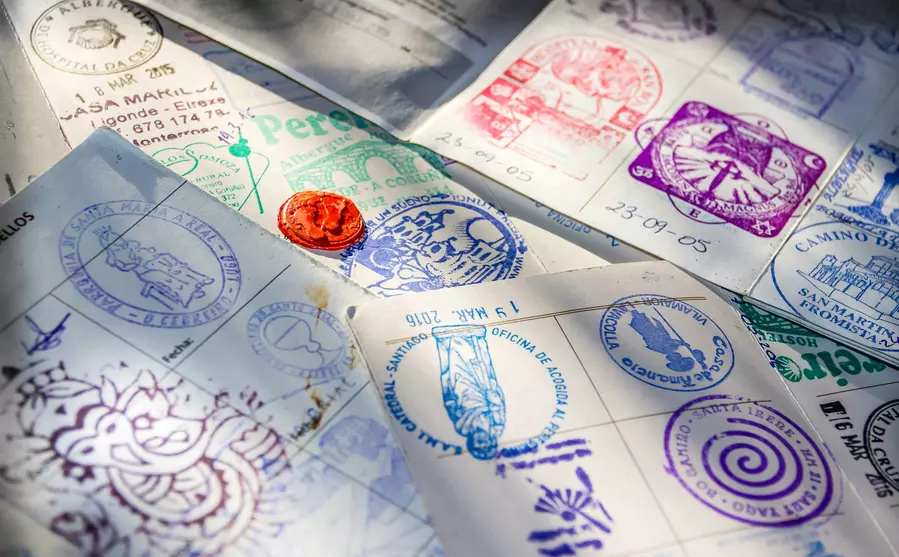
You may hear two names for this document. The "credencial" is issued by the Church; the "crédential" is the secular equivalent, typically provided by walking associations. Both serve the same purpose.

The credential is a pilgrim passport, traditionally carried by those walking the Camino for spiritual reasons. It is a letter of introduction, recommending the bearer to anyone they meet along the way.

You collect a stamp at each stage, given by a priest, the town hall, the tourist office or your accommodation. It is proof that you have walked the route.

You can obtain it from the Camino association closest to your home. It can also be ordered by filling in the form on the following website: www.chemins-compostelle.com.

It is also available at Le Puy-en-Velay Cathedral, where it is offered after the 7 a.m. mass and blessing. During the day, you can request it from the sacristy (10 a.m. to 12 p.m. and 2 p.m. to 6 p.m. during the season). Tel: +33 4 71 05 98 74.

The Scallop Shell

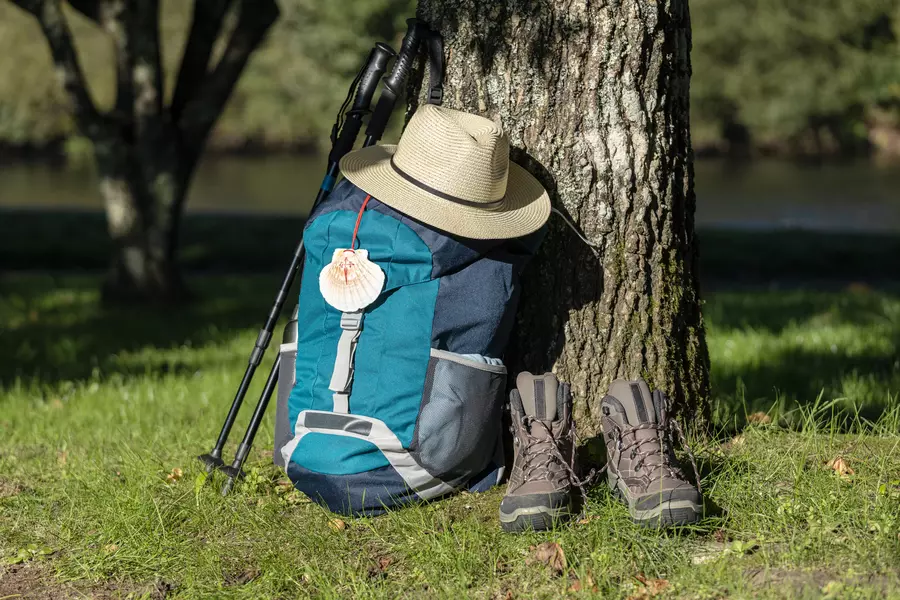
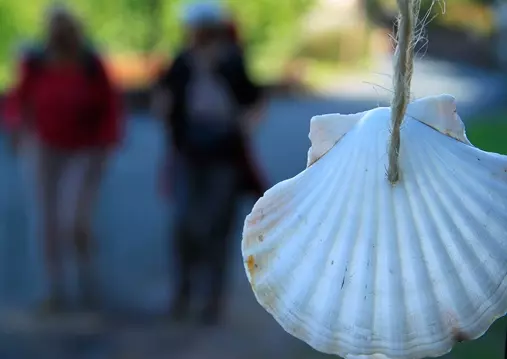
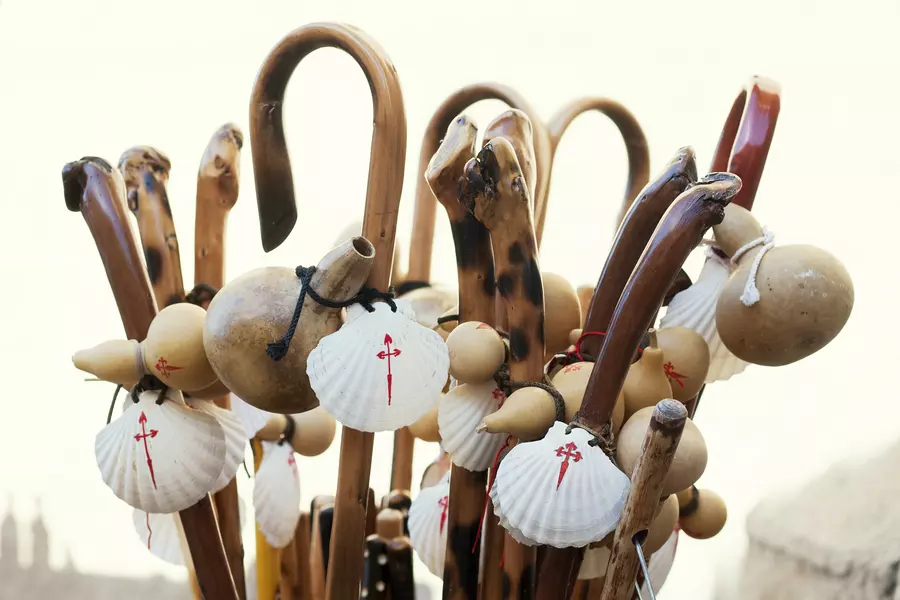
The scallop shell that pilgrims brought back from the coast of Galicia was proof of their long journey. In the early days, pilgrims picked up shells on the beaches and carried them home. Since antiquity, shells had been worn as protection against misfortune and illness.

Over time, the shell became the symbol of the apostle and took the name of St James. Hung from a hat, a bag or a cloak, it became the emblem of Camino pilgrims, and of pilgrims everywhere. It served to distinguish them from other travellers, offered a form of protection, and entitled the bearer to drink from public fountains and ask for charity, as giving to a pilgrim bearing the shell was considered an obligation.

To this day, pilgrims hang a scallop shell from their rucksack or walking pole.

The Pilgrim Staff

In religious art, St James is always shown with a staff at his side. This staff became the essential companion of Camino pilgrims, and of pilgrims on all the great routes of the medieval world. In the Middle Ages, the staff served both as a walking aid and as a means of self-defence.

UNESCO World Heritage Sites on the Camino

Several routes lead to the Cathedral of Santiago de Compostela. Walkers can follow the Via Turonensis (from Tours), the Via Tolosana (from Arles), or the Via Podiensis (from Le Puy-en-Velay), the best-known route across France.

Along the Via Podiensis alone, 71 monuments and 7 sections of the trail are listed as UNESCO World Heritage Sites, a reflection of the extraordinary heritage along this route.

Among them are the Abbey Church of Sainte-Foy and the pilgrims' bridge over the Dourdou at Conques, the Pont Valentré and the cathedral at Cahors, the Hôtel-Dieu and the Notre-Dame Cathedral at Le Puy-en-Velay, and many more.